
In this guide:
- Where to find serving size and why it comes first
- What total carbohydrate, fiber and added sugars mean
- How to compare two products side by side
- Questions to bring to your care team
A packaged food can look healthy on the front and tell a different story on the back. The Nutrition Facts label is the part that gives the full picture, and reading it is a skill that gets faster with practice. This guide walks through the label from top to bottom in plain language, so you can use it as one tool among many when you plan meals with your care team.
This is general information, not medical advice. Your physician, pharmacist or a certified diabetes care and education specialist can tell you which numbers matter for you and how to use them.
Start with the serving size
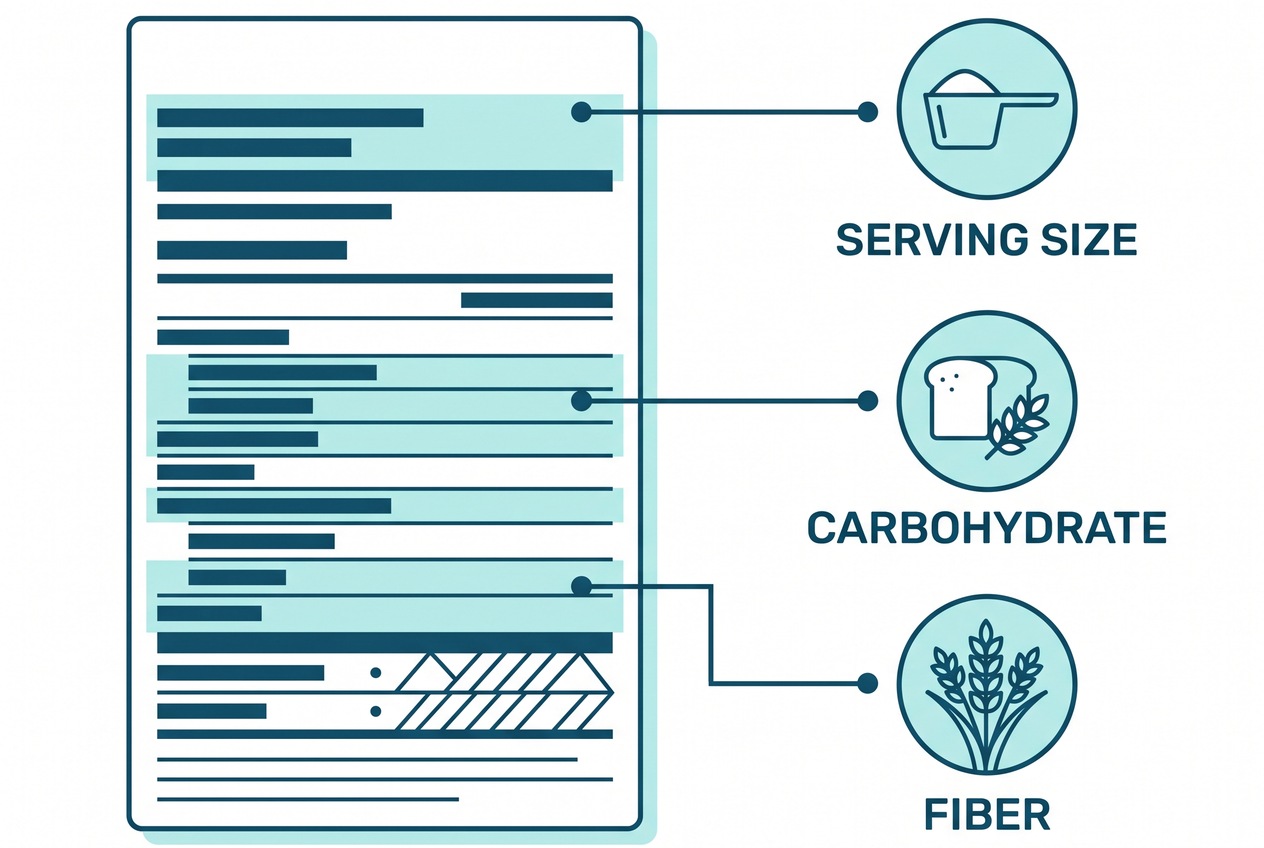
Everything on the label refers to one serving, not to the whole package. The serving size and the number of servings per container appear at the top. A bag that looks like a single portion may hold two or three servings, so the numbers below it must be multiplied if you eat the whole bag.
Compare the serving size with what you actually eat. If the label lists half a cup of cereal and you pour a full cup, you are eating twice the carbohydrate shown. Measuring cups and a small kitchen scale make it easier to see what a serving looks like.
Total carbohydrate
Total carbohydrate is the line most people with diabetes pay attention to, because carbohydrate has the largest direct effect on glucose after a meal. It includes starches, sugars and fiber, all counted together.
Under the total, you will see lines for dietary fiber and total sugars. Added sugars appear as a separate line underneath total sugars. Together they show how much of the carbohydrate comes from each source.
Dietary fiber
Fiber is a type of carbohydrate that the body does not fully digest. Foods higher in fiber, such as beans, vegetables and whole grains, tend to be more filling. Some meal-planning methods adjust the carbohydrate count for fiber, and others do not. Ask your care team how they want you to count it.
Total sugars and added sugars
Total sugars include sugars found naturally in foods, such as the sugar in milk or fruit, and sugars added during processing. The added sugars line shows only the sugars put in by the manufacturer. Ingredient lists may name them as syrup, dextrose, maltose, honey, juice concentrate and many other terms.
Sugar alcohols
Some products list sugar alcohols, which are used to sweeten foods with less sugar. They still count toward the total carbohydrate. Ask your care team whether and how to adjust for them.
Other lines on the label
| Line on the label | What it tells you | Why it may matter |
|---|---|---|
| Calories | Energy in one serving | Helps with portion planning |
| Total fat and saturated fat | Fat content | Part of a heart-healthy plan |
| Sodium | Salt content | Relevant to blood pressure |
| Protein | Protein in one serving | Helps with fullness |
| Percent Daily Value | Share of a daily amount | A quick way to compare foods |
The percent Daily Value column gives a quick guide. As a general rule from the FDA, 5 percent or less of a nutrient per serving is low, and 20 percent or more is high. Use it to compare products, not as a personal target.
Front-of-package claims
Claims on the front of a package are marketing, not a substitute for the label. Terms such as natural, wholesome or made with whole grains do not tell you how much carbohydrate a food has. Sugar-free does not mean carbohydrate-free, because starches and sugar alcohols may still be present. Always check the label on the back.
Comparing two products
Place the two labels side by side and work through them in order.
- Check that the serving sizes are similar.
- Compare total carbohydrate.
- Compare fiber and added sugars.
- Look at sodium and saturated fat.
- Read the ingredient list for the first few items.
The ingredients are listed from most to least by weight. If sugar or a syrup appears near the top, the product contains a lot of it.
Eating out and foods without labels
Many chain restaurants publish nutrition information on their websites or menus, and it can be checked before you go. Look for carbohydrate totals and serving sizes, and remember that restaurant portions are often larger than a label serving. Ask how a dish is prepared, and whether sauces or dressings can be served on the side.
For foods with no label, such as a homemade dish or a bakery item, ask your care team or a dietitian how to estimate portions. A phone app or a reference book can help, and a measuring cup is useful at home.
Making it a habit
Reading labels takes a few extra seconds at the store. Pick a short list of foods you buy often, check their labels once, and note the numbers in your phone or notebook. Over time, you will recognize the products that fit your plan without checking every time.
Fresh foods such as vegetables, eggs and plain meats don’t have labels, and they make up a large part of many meal plans. Use labels for packaged foods and rely on your care team for guidance on portions of fresh foods.
Questions for your care team
- How much carbohydrate should I aim for at meals and snacks?
- Should I subtract fiber or sugar alcohols from the total?
- Which lines on the label matter most for me?
- Can you help me compare the foods I eat most often?
- Would a visit with a dietitian be helpful?
Key points
Start with serving size, then read total carbohydrate, fiber and added sugars. Ignore marketing claims on the front and compare products using the label on the back. Use these numbers as one tool alongside the plan you build with your care team.